
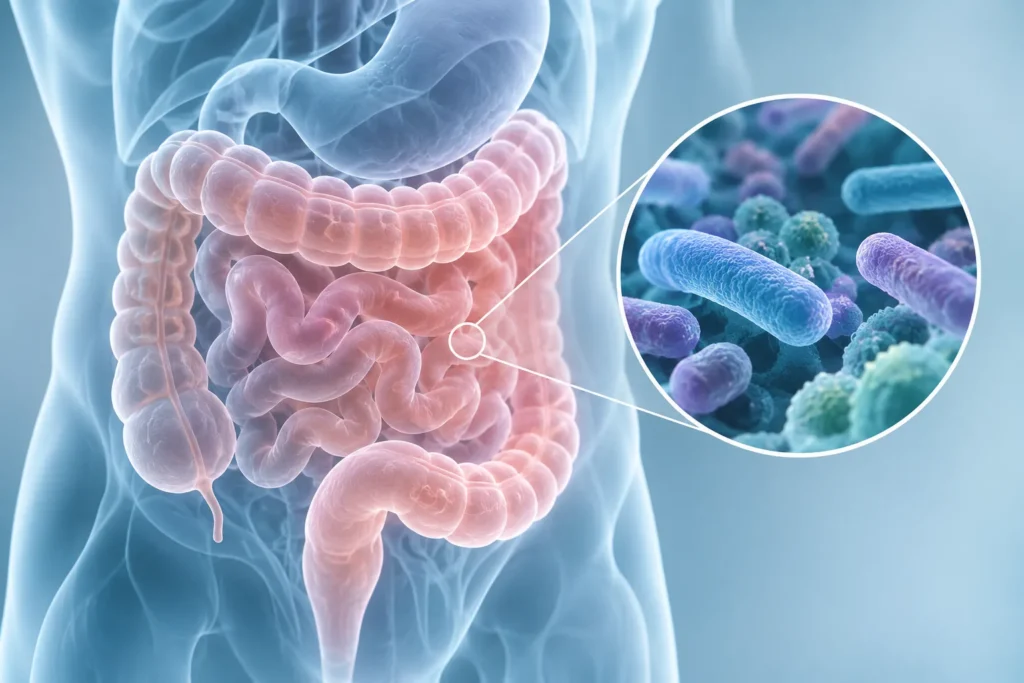
Gut dysbiosis is an alteration in the composition or functioning of the gut microbiota, the community of microorganisms that inhabit our intestines.
These changes may be associated with factors such as diet, the use of antibiotics, certain diseases, or changes in lifestyle.
The gut microbiota plays a role in numerous processes that are important for health, from digestion and nutrient metabolism to the regulation of the immune system. As a result, its study has attracted growing scientific interest.
However, there is no single gut microbiota composition that is considered healthy for everyone, and the presence of certain microorganisms alone is not sufficient to establish a diagnosis of dysbiosis.
In this article, we explain what gut dysbiosis is, its possible causes and manifestations, its relationship with various diseases, and how the gut microbiota can be studied using genetic sequencing techniques.
What Is Gut Dysbiosis?
Gut dysbiosis is defined as an alteration in the composition, diversity, or functional activity of the microbial communities that inhabit the intestine.
Under normal conditions, these microorganisms interact extensively with one another and with our bodies, contributing to essential processes involved in intestinal function.
Each person’s gut microbiota is unique and can change throughout life depending on age, diet, medications, environmental factors, and other influences.
Therefore, dysbiosis should not be understood simply as a lack of beneficial bacteria or an excess of harmful bacteria. It is a more complex concept that may involve changes in the abundance of certain species, microbial diversity, or the functions performed by these microorganisms.
Although patterns of microbiota alterations associated with various diseases have been identified, there are currently no universal criteria for defining and diagnosing gut dysbiosis in all individuals.
What Are the Functions of the Gut Microbiota?
The gut microbiota consists mainly of bacteria, although it also includes archaea, viruses, fungi, and other microorganisms.
These microbial communities perform important functions in our bodies:
– Digestion and nutrient metabolism: they contribute to the fermentation of dietary components that our bodies cannot digest directly, such as certain types of fibre.
– Production of bioactive compounds: they produce substances such as short-chain fatty acids, which play a role in metabolism and intestinal function.
– Regulation of the immune system: they contribute to the development and maintenance of appropriate immune responses.
– Protection against pathogenic microorganisms: they compete for nutrients and space, making it more difficult for certain infectious agents to colonise the intestine.
– Metabolism of medications and other substances: they can modify the availability and activity of certain compounds.
In addition, there is bidirectional communication between the gut and the central nervous system, known as the gut-brain axis, in which the microbiota may play an important role.
These functions help explain why the study of the gut microbiota has become an area of considerable interest in biomedical research.
Main Causes of Gut Dysbiosis
The composition of the gut microbiota can be influenced by numerous factors, which often act together.
Diet
Diet is one of the main factors influencing the gut microbiota.
A varied diet rich in plant-based foods and fibre can promote the activity of microorganisms capable of metabolising these components.
Conversely, certain dietary patterns characterised by a high consumption of ultra-processed foods and a low fibre intake may be associated with unfavourable changes in the composition and activity of the gut microbiota.
Use of Antibiotics and Other Medications
Antibiotics can significantly alter intestinal bacterial communities, as their effects are not always limited to the microorganisms responsible for an infection.
The extent and duration of these changes depend on the antibiotic used, the length of treatment, and individual characteristics.
Other medications can also influence the gut microbiota, although their effects vary depending on the drug.
Infections and Digestive Diseases
Gastrointestinal infections and certain inflammatory or digestive diseases may be accompanied by alterations in intestinal microbial communities.
In some cases, these changes may persist after the initial episode has resolved.
Stress, Sleep and Physical Activity
Stress, sleep disturbances, and physical activity may be associated with changes in the intestinal environment and the gut microbiota.
However, these relationships are complex, and the underlying mechanisms and their clinical relevance are still being investigated.
What Symptoms May Be Associated with Changes in the Gut Microbiota?
Alterations in the gut microbiota have been studied in people experiencing various digestive symptoms, including:
– Bloating or abdominal distension.
– Excessive gas.
– Diarrhoea or constipation.
– Abdominal pain or discomfort.
– Changes in bowel habits.
Possible associations between the gut microbiota and symptoms beyond the digestive system, such as fatigue, certain metabolic disorders, or mood disturbances, have also been investigated.
However, these symptoms are not specific to gut dysbiosis and may occur in numerous diseases or clinical conditions.
For this reason, dysbiosis cannot be diagnosed based on symptoms alone. When digestive symptoms persist, a clinical assessment is important to identify or rule out other possible causes.
What Is the Relationship Between Gut Dysbiosis and Other Diseases?
In recent years, numerous studies have identified differences in the composition and activity of the gut microbiota between healthy individuals and patients with certain diseases.
Among the most extensively investigated conditions are:
– Irritable bowel syndrome (IBS): alterations in the gut microbiota have been described in certain groups of patients, although findings remain heterogeneous.
– Inflammatory bowel diseases (IBD): both Crohn’s disease and ulcerative colitis are associated with changes in intestinal microbial communities.
– Obesity and type 2 diabetes: researchers are investigating the relationships between the gut microbiota, energy metabolism, and glucose regulation.
– Immune-mediated diseases: associations have been observed between the gut microbiota and various alterations in immune responses.
– Neurological and mood disorders: research into the gut-brain axis is exploring potential mechanisms of communication between the microbiota and the nervous system.
It is important to distinguish between association and causation.
Identifying differences in the gut microbiota of people with a particular disease does not necessarily demonstrate that these alterations are the cause.
They may also be a consequence of the disease itself, its treatments, or other associated factors.
Therefore, although research is progressing rapidly, significant limitations remain in the use of specific microbial profiles as diagnostic or predictive tools at the individual level.

How Is the Gut Microbiota Studied?
Traditionally, the study of intestinal microorganisms has relied on microbiological techniques, such as culturing.
However, many microorganisms found in the gut are difficult to culture using conventional methods.
The development of genetic sequencing techniques has considerably expanded our understanding of microbial communities.
Several approaches are currently available for studying the gut microbiota.
16S rRNA Gene Sequencing
This technique allows the characterisation of bacterial and archaeal communities by analysing regions of a gene present in these microorganisms.
It is useful for studying their composition and diversity, although it has limitations in distinguishing certain species and does not allow the direct characterisation of all groups of microorganisms present.
Shotgun Metagenomic Sequencing
Shotgun metagenomic sequencing analyses DNA fragments present in a sample without being restricted to a single marker gene.
This approach can provide more comprehensive information about the microorganisms detected, including bacteria, archaea, and certain viruses and fungi, depending on the characteristics of the sample and the analytical procedure.
It also allows the investigation of genes and metabolic pathways present in microbial communities, providing information about their functional potential.
However, identifying specific genes does not necessarily demonstrate that they are being expressed or that their metabolic functions are active.
Can a Gut Microbiota Test Diagnose Dysbiosis?
Gut microbiota tests provide information about the microbial communities present in an intestinal sample, usually a stool sample.
However, there is currently no universally accepted definition of a healthy gut microbiota or reference values applicable to all individuals.
Microbial composition can vary considerably between healthy individuals, and results also depend on technical factors, such as the DNA extraction method, sequencing technology, and bioinformatics tools used.
Therefore, a gut microbiota analysis should not, on its own, be considered a diagnostic test for a disease or a tool that can necessarily explain the underlying cause of digestive symptoms.
Interpreting the results requires an understanding of the capabilities and limitations of the methodology used, as well as an assessment of the findings within the appropriate context.
Can Gut Microbiota Health Be Improved?
Although there is no universal intervention capable of correcting all alterations in the gut microbiota, certain habits may help maintain intestinal health.
A Varied, Fibre-Rich Diet
Regular consumption of fruits, vegetables, legumes, nuts, and whole grains provides different types of fibre and other compounds that can be utilised by intestinal microorganisms.
A diverse diet may support various metabolic functions of the gut microbiota.
Prebiotics and Probiotics
Prebiotics are substances selectively utilised by host microorganisms that can provide health benefits.
Probiotics are live microorganisms that, when administered in adequate amounts, confer a health benefit.
However, their effects depend on the specific strain, dose, and intended use. Not all probiotics offer the same benefits, and their use is not necessarily recommended for every suspected case of dysbiosis.
Physical Activity and Rest
Regular physical activity, adequate rest, and maintaining healthy habits can contribute to overall well-being and digestive health.
Avoiding Unnecessary Treatments
Antibiotics should only be used when medically indicated. It is also important to avoid treatments or supplements intended to modify the gut microbiota without appropriate justification.
For individuals experiencing persistent digestive symptoms, recommendations should be tailored to their clinical situation and any potential underlying conditions.
Gut Microbiota Testing at Genosalut
At Genosalut, we offer two tests for analysing the gut microbiota, based on advanced next-generation metagenomic sequencing (NGS) techniques.
These technologies allow us to analyse the DNA of microorganisms present in a stool sample and obtain detailed information about the composition, diversity, and functional potential of the gut microbiota.
Unlike tests that target only specific bacterial groups, metagenomic sequencing enables the analysis of a wide range of microorganisms, including bacteria, archaea, viruses, and eukaryotic microorganisms such as fungi and yeasts.
The resulting data are processed using specialised bioinformatics tools and compared with reference databases, providing information about the microbial communities identified and their characteristics.
What Gut Microbiota Tests Do We Offer?
We offer two testing options, which differ in the range of parameters analysed.
Gut Dysbiosis – Clinical Profile
This test characterises the gut microbiota using metagenomic sequencing and provides information on:
– Gut microbiota composition and diversity.
– Identification of microorganisms and analysis of their relative abundance.
– Microbiota characterisation indices and enterotype.
– Detection of certain potentially pathogenic microorganisms and viruses.
– Analysis of the microbiome’s functional potential.
– Information on possible associations between the gut microbiota and food tolerance.
The report includes an interpretation of the results and general recommendations based on the parameters analysed.
Gut Dysbiosis – Comprehensive Clinical Profile
This test includes all the parameters covered by the Clinical Profile, together with the analysis of additional intestinal markers:
– Digestion: faecal pH and pancreatic elastase.
– Intestinal inflammation: haemoglobin, calprotectin, and lactoferrin.
– Infection: testing for Helicobacter pylori.
– Intestinal permeability and alterations: alpha-1 antitrypsin and zonulin.
This profile provides additional information on various aspects of intestinal function, which may be useful when a more comprehensive assessment is required.
How Is the Test Performed?
The test is performed using a stool sample, which must be collected in a sterile container and stored frozen according to the instructions provided.
A questionnaire is also completed, covering dietary habits, medications, probiotic use, medical history, and other factors that may influence the composition of the gut microbiota.
This information helps contextualise the results and take individual characteristics into account when interpreting them.
What Information Do the Results Provide?
The reports provide information about the composition and characteristics of the gut microbiota and, in the Comprehensive Clinical Profile, additional digestive markers.
Although these tests allow the investigation of aspects of the microbiome that cannot be assessed using conventional microbiological techniques, their results must be interpreted in light of the current limitations of scientific knowledge.
Identifying certain alterations in the gut microbiota does not necessarily indicate the presence of a disease, nor does it establish the underlying cause of symptoms on its own.
Similarly, associations between specific microbial profiles and diseases do not always have a demonstrated causal relationship.
Therefore, these tests should be considered complementary tools for characterising the gut microbiota and do not replace medical assessment or diagnostic tests indicated in each individual case.
Would You Like to Learn More About Your Gut Microbiota?
Contact Genosalut for information about our gut microbiota tests, the differences between the two profiles, and the sample collection procedure.
Frequently Asked Questions About Gut Dysbiosis
What Exactly Is Gut Dysbiosis?
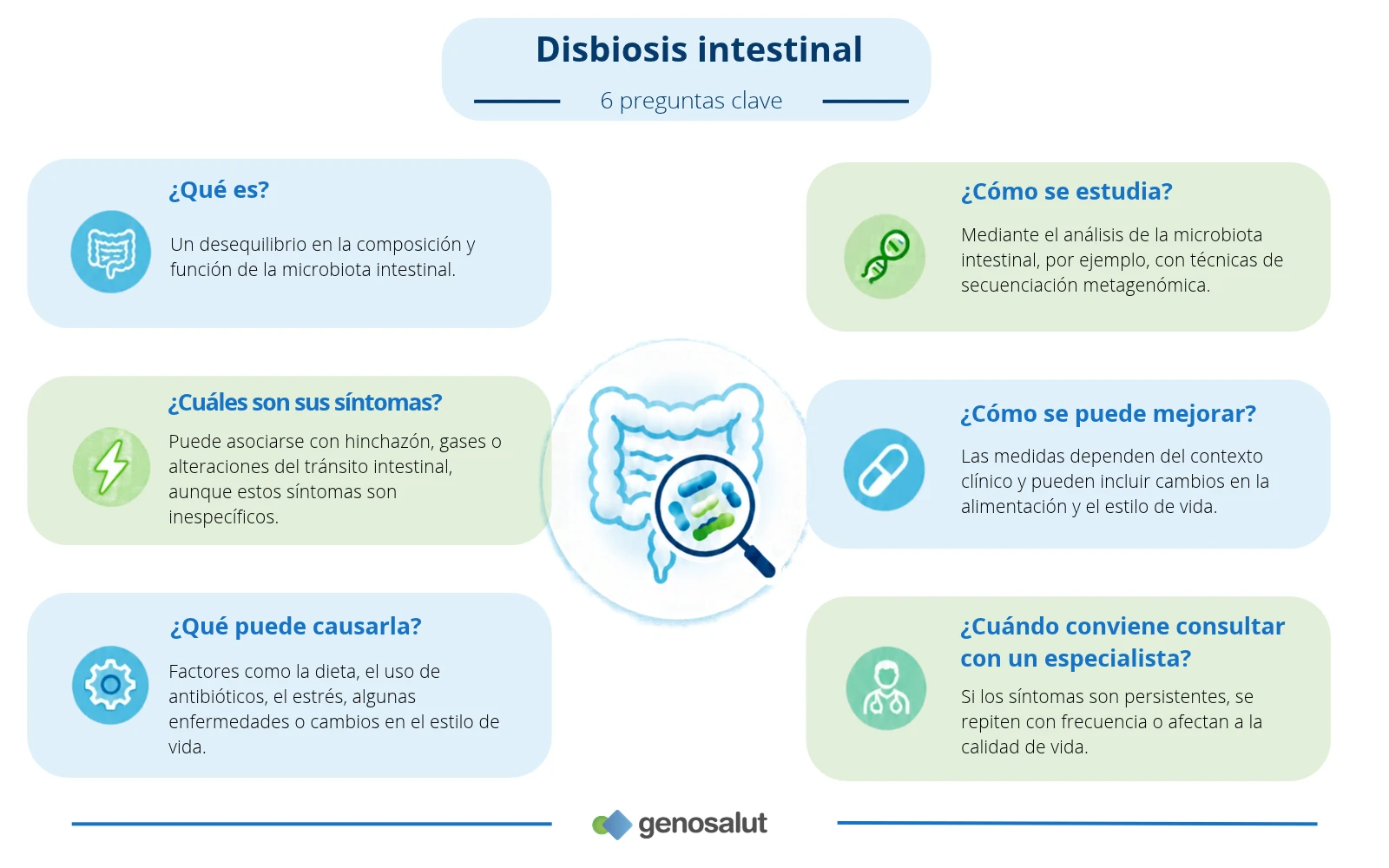
Gut dysbiosis is an alteration in the composition or functioning of the gut microbiota. It may be associated with various factors and diseases, but there are currently no universal criteria for diagnosing it consistently across all individuals.
What Are the Most Common Symptoms of Gut Dysbiosis?
Digestive symptoms that have been studied in relation to alterations in the gut microbiota include bloating, excessive gas, abdominal pain, diarrhoea, and constipation. However, these symptoms are non-specific and can have numerous causes.
How Can I Tell If I Have Gut Dysbiosis?
There is no single, universally validated test for diagnosing gut dysbiosis. Sequencing techniques allow the composition of the gut microbiota to be studied, but the results must be interpreted with caution and do not replace a clinical assessment.
What Is the Difference Between Microbiota and Microbiome?
The microbiota refers to the community of microorganisms present in a particular environment, such as the gut. The term microbiome is used to refer to these microorganisms, their genetic information, and, depending on the definition used, their environment and interactions.
Can the Gut Microbiota Recover After Taking Antibiotics?
The gut microbiota can undergo recovery following antibiotic treatment, although the speed and extent of recovery vary between individuals and treatments. Specific interventions are not always necessary to support this process.
Can Probiotics Be Used to Treat Dysbiosis?
Some probiotics have demonstrated benefits in certain clinical situations, but their effects depend on the strains used and the specific indication. There is insufficient evidence to recommend a single probiotic as a general treatment for all alterations in the gut microbiota.
What Information Does a Metagenomic Gut Microbiota Analysis Provide?
It can provide information about the microorganisms detected, their relative abundance, and their diversity. Depending on the methodology, it may also provide information about genes and the potential functions of microbial communities. However, its clinical interpretation still has limitations.
If you like our blog, subscribe to our newsletter.

